
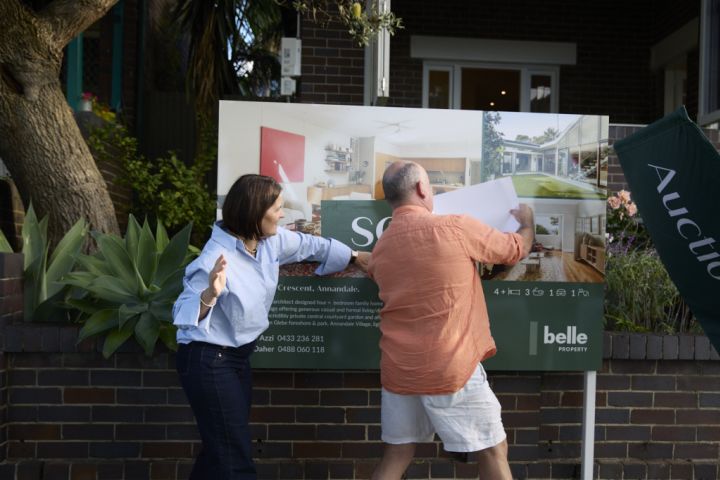
With interest rates rising, should you buy now or wait to see what happens?
With the latest interest rate rise, should buyers act now - or wait to see what happens?
On the side of jumping into the market now, most analysts predict at least two more cash rate hikes this year, which could be avoided with fixed-rate borrowing. On the other hand, however, the continuing Middle East war, some economists warn, could slip us into a recession that might cause supply to rise, property prices to slide, and make homes more affordable further down the track.
It looks like an intractable conundrum, but Domain chief of research and economics Dr Nicola Powell is adamant the answer’s much easier than it seems.
“At the end of the day, you’ve got to buy when it’s right for you,” she advises.
“What you’ve got is very uncertain circumstances at the moment, which creates jitters among buyers.
“We’ll definitely see a slowdown in transactions and sales as a result, and we’ll start to see supply rise. That’s usually what happens under these types of dynamics, and maybe we’ll see a slowdown in price growth or even a dip in prices.
“But it’s really impossible to foresee what is going to happen, and the most important thing is always finding the right home for you at a price you feel comfortable with, and then jumping on it.”
On March 17, the Reserve Bank of Australia (RBA) increased the official cash rate by 25 basis points to 4.1 per cant, aiming to curb inflation by raising the cost of borrowing. This will add around $100 a month in repayments for an average $600,000 mortgage. Many economists are now suggesting there could be two more rate hikes this year, peaking at the end of 2026 or perhaps in early 2027.
Westpac is also predicting triple rate hikes by the end of 2026, which is spurring some buyers to act quickly – and others to sit on the fence, biding their time. Economist and mortgage broker Joseph Daoud of Simple Finance, however, urges potential buyers to seek financing approval as soon as possible so they can move if they see an opportunity.
“With rates expected to remain elevated and inflation still a factor, we’re likely to see some slowdown in price growth certain areas,” he says.
“But structural supply constraints mean prices aren’t likely to fall significantly. Buyers who act strategically, secure pre-approval early, and move decisively will be in a stronger position than those who wait.
“The RBA’s decision reinforces that borrowing costs aren’t coming down anytime soon. Buyers are already facing tighter borrowing capacity, and any future rate increases will further reduce what they can afford.
“The sooner you get finance approval, the clearer your position in the market.”
Already, the market is weakening, with Domain figures showing clearance rates have slipped below 60 per cent. Yet buyers’ advocate Rich Harvey, chief executive of Propertybuyer Australia, takes that as a sign for buyers to act counter-cyclically.
They might expect demand to fall with interest rate rises, and then price growth to slow or tank, so they’ll get a bargain, but nothing is so straightforward. The direction and strength of those forces could vary greatly between locations, capital cities and property types.
“Peak uncertainty can also create peak opportunity,” he says.
“When everyone is running scared with interest rates rising, there might be five bidders or even two, when there might normally be 10. So, whether you should buy now or later is probably the wrong question.
“Instead, we should be asking, ‘Can you afford to buy now, and how long are you prepared to hold that property?’ It’s very hard to time your entry into the market exactly as you wish.
“We don’t know whether inflation will persist with government spending and oil prices. But our economy is fairly resilient, and we know that, over time, property always does well.”
If buyers do hang back a little, they might have more time to save for their deposits and more room to negotiate prices and sale terms, suggests Powell.
They’ll also need to make doubly sure they can afford their repayments with higher rates on the way.
Doud also warns them to be careful.
“We’re seeing buyers’ borrowing power reduced by rate rises and ongoing cost-of-living pressures,” he says.
“Even households that would have comfortably qualified a few months ago may now need to rethink their budget, deposit, or property type.
“The market is testing buyers’ financial resilience in a way we haven’t seen for several years."
Source: https://www.domain.com.au
You might also be interested in

Sep 22, 2026
Inflation risks building as RBA weighs up appetite for more hikes
Inflation is likely to continue running hot into the end of the year, with the Reserve Bank issuing a warning on the likely path for interest rates as it prepares to make a decision in two weeks’ time
Sep 7, 2026
3 ways home sellers can succeed in tough property markets
Vendors are finding it tougher to sell homes across the country as property prices cool and buyers spend more time to make a decision, but experts say there are three factors that can help sellers get